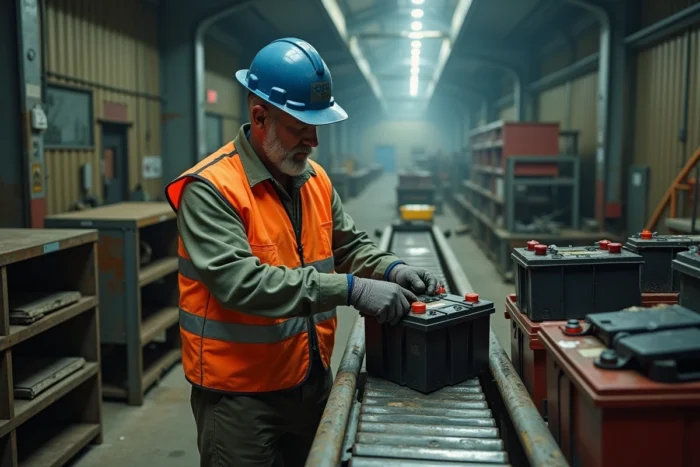
The European regulation 2023/1542 on batteries imposes, starting in 2026, recycling yield obligations by material and traceability of batches. For lead from lead-acid batteries, the required recovery rate reaches 90% as early as 2027. These constraints directly modify the cost structure of recyclers and, by extension, the buyback prices applied to individuals and professionals who drop off their used batteries.
Restriction of exports of used batteries and pressure on recycled lead in Europe
Competitors largely address regulation 2023/1542 from the perspective of quantified recovery targets. However, a less commented factor weighs on prices: the increasing restriction on the export of lead battery waste.
A decree from March 2025 regarding the management of waste from electrical and electronic equipment provides for the suspension for ten years of the export of waste and debris from used lead batteries. The collection and marketing of this waste are exclusively reserved for certified artisans.
In practice, this measure cuts off access to lower-cost treatment channels located outside Europe. Recyclers like Derichebourg must absorb the entire local yield, which increases the demand for treatment capacities on European soil. When observing the price of lead from Derichebourg batteries, this logistical constraint translates into structural support for the price of recycled lead in the domestic market.
The mechanism is quite direct: fewer exports mean more material to process in Europe, leading to additional investments in infrastructure, and a processing cost that is passed on to the buyback price.
Lead recovery rates: how regulation 2023/1542 redefines treatment costs
The European regulation no longer just sets overall collection targets. It imposes recovery rates by material. For cobalt, nickel, copper, and lead, the target is set at 90% recovery by 2027.
Achieving a 90% recovery rate for lead is not a major technological challenge for the lead-acid sector, whose recycling rates in Europe already far exceed this threshold. The novelty lies in the obligation for proof.
Traceability and mandatory reporting
Each batch of batteries must now be documented from collection to final recovery. The recycler must prove, with supporting audits, that the recovery rate is achieved material by material. This reporting generates administrative and IT costs that did not exist before.
- Identification and weighing of each batch at the entrance of the sorting center, with digital traceability of the path to the foundry
- Periodic reporting of recovery yields by material to the competent authorities
- Data retention for several years to allow for retrospective checks
For a group like Derichebourg, which has invested 35 million euros in its automotive battery recycling sector, these compliance costs add to the industrial cost of treatment. They are mechanically passed on to the buyback price offered to the depositor.
Lithium-ion and lead-acid batteries: two sectors, two pricing logics
Regulation 2023/1542 covers all battery chemistries, but its effects on prices differ according to technology. For lithium, the recovery target is 50% by 2027, then 80% by 2031. These thresholds are significantly more difficult to achieve than those for lead, as the hydrometallurgical processes required remain costly and less mature at an industrial scale.
The lead-acid battery benefits from an old and well-established recycling sector (pyrometallurgy). Lead melts easily and retains its properties. The regulatory cost therefore impacts less on technology than on documentation and logistics.
Fire risk and sorting cost increase
Poorly sorted lithium-ion batteries cause fires in sorting centers. This risk has been documented by several industry players, with dozens of incidents reported over the last decade in French facilities. The cost of prevention (detection, extinguishing, staff training) is shared across the entire recycling chain, including for lead-acid batteries processed in the same centers.
- Investment in thermal detection and automatic extinguishing systems in storage areas
- Enhanced pre-sorting to separate lithium-ion batteries from lead-acid batteries before treatment
- More expensive insurance for recycling sites that process both chemistries

Industrial recycling capacities in Europe facing 2026 obligations
The global market for lead-acid battery recycling was estimated at 13.2 billion dollars in 2025, with a projection of 14.3 billion in 2026 according to Global Market Insights. The average annual growth rate expected until 2035 reaches 9.1%. This dynamic is explained by the increasing adoption of electric vehicles and the integration of renewable energies, which multiply storage needs.
In Europe, the tension between volumes to be processed and installed capacities is the most direct influencing factor on prices. When the demand for processing exceeds local supply (amplified by the export ban), the price of recycled lead rises, and buyback rates follow.
Ecobat dominated the global market with over 13.5% market share in 2025. Derichebourg, positioned in France with its recent investments, faces a strategic choice: increase its capacities to capture more volume, or pass the capacity constraint onto its pricing grids.
The 2026 recycling rules do not fundamentally change lead metallurgy. They alter the economic framework in which this metallurgy operates: more traceability, less export, and strained capacities. The buyback price of a battery at Derichebourg now reflects both the price of lead on the London Metal Exchange and the cost of European regulatory compliance.