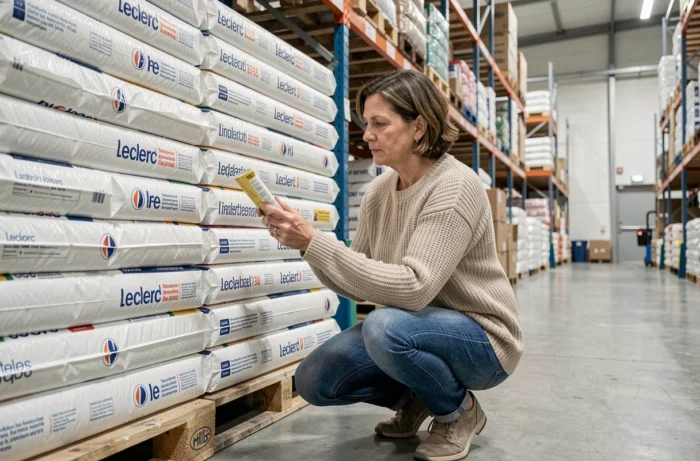
The price of a bag of pellets at Leclerc today ranges between 3.50 and 5.99 euros for a 15 kg package, depending on the store, brand, and time of purchase. This wide range reflects a stabilized market after the tensions of 2022-2023, but the price displayed on the shelf only tells part of the story. The actual cost depends on the chosen format, the distribution channel, and especially the distance between the depot and the home.
Leclerc’s Competitive Threshold: When Delivery Erases Savings
Most comparisons focus on the face value of the bag or pallet. The calculation that really matters includes delivery fees, the number of pallets ordered, and geographical location.
In Finistère, a regional supplier like Bretagne Multi-Energies lists about 402 euros including tax delivered for a pallet, then 392 euros and 387 euros per pallet for bulk orders. At TotalEnergies, a pallet of 66 bags costs around 419 euros in July 2026. The difference between these two offers goes beyond the simple price gap per bag: it relates to whether or not the logistical cost is included.
A buyer located near a Leclerc warehouse with in-store pickup pays the gross rate, without transportation surcharges. The same buyer in a rural area, forty kilometers from the nearest point of sale, sees their bill increase significantly if delivery is charged separately. Beyond a certain radius, the Leclerc pallet loses its advantage against a local supplier that includes transportation in its price.
To track these variations throughout the year, the evolution of the Leclerc pellet prices in 2026 depends as much on seasonality as on the chosen purchasing channel.
Price per Kilo of Pellets: The Only Reliable Indicator for Comparison
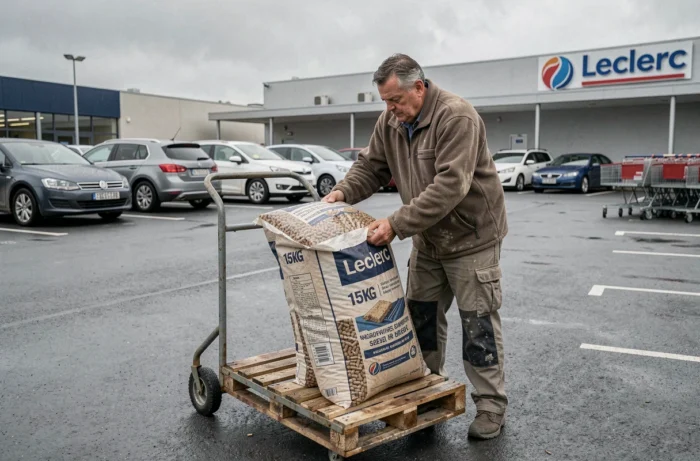
Comparing a bag at 4.69 euros and a pallet at 400 euros only makes sense when everything is converted to a kilogram. The price per kilo neutralizes differences in packaging and volume.
A 15 kg bag sold for 4.69 euros costs about 0.31 euros per kilo. The same pellet bought individually at 5.99 euros rises to 0.40 euros per kilo. Over a complete heating season for an average-sized house, this difference of a few cents per kilo translates into several dozen euros of difference.
Purchase Formats and Their Implications
- The individual bag (15 kg) is suitable for an emergency or brand testing, but its price per kilo remains the highest on the market
- The pallet (usually 66 bags, or about one ton) reduces the unit cost and justifies organized storage in a dry, elevated place
- Ordering multiple pallets triggers volume discounts with most suppliers, with reductions of around 5 to 15 euros per additional pallet
- Bulk delivery by blower truck represents the cheapest format per kilo but requires a dedicated silo, which Leclerc does not directly offer
Bulk remains the most economical format per kilo, but it effectively excludes the Leclerc brand from the game. For users without a silo, the delivered pallet remains the most common compromise.
Seasonality of the Wood Pellet Market in 2026
The price of pellets follows a predictable annual cycle. In summer, demand drops, and suppliers seek to clear their stocks before the new production season. This is the most favorable buying window.
In France, summer 2026 reports confirm this trend. Prices remain contained between June and August, then an increase begins in September. In neighboring Germany, the price of bulk was around 376 euros per ton in June 2026, a level that serves as a benchmark for the European market.
Buying between April and August helps avoid the price pressure of the back-to-school season. Leclerc’s promotions on pellets often appear during this period, but they vary from one store to another without a uniform national calendar.
What Influences Prices Beyond the Season
Certification plays a direct role in pricing. A certified pellet DINplus or NF Biocombustibles costs slightly more than an unlabeled product, but it guarantees a low ash content and stable calorific value. Over time, a low-quality pellet clogs the fireplace, increases the frequency of chimney sweeping, and degrades the stove’s efficiency.
Brand also matters. At Leclerc, you can find brands like Woodstock or Naturpellet depending on the regions. Price differences between brands reflect more the local supply chains than fundamental quality differences, given equivalent certification.
Leclerc Pellets or Local Supplier: Concrete Selection Criteria
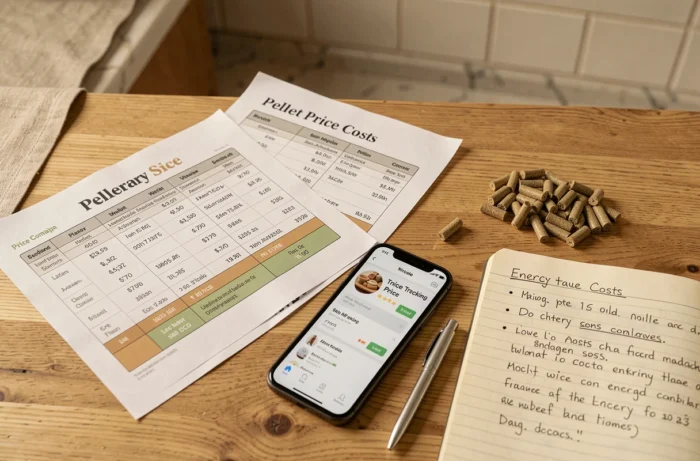
The supermarket reflex works well for a one-time purchase or in-store pickup without shipping costs. However, for an annual supply of several tons, comparing with a regional supplier deserves serious consideration.
- A local supplier often includes delivery in the displayed price, simplifying the comparison
- Unloading with a pallet jack or crane is sometimes included with the professional, rarely with Leclerc for home delivery
- Stock availability varies greatly from one Leclerc to another: some stores run out of their pallets by mid-September
The choice between Leclerc and a local distributor hinges on the total delivered cost, not the shelf price. A delivered quote, including unloading fees, remains the only valid basis for comparison.
The wood pellet market in 2026 rewards buyers who calculate based on delivered kilos rather than displayed bags. The upcoming seasonal increase in September will confirm, as every year, that summer prices remain the best reference for locking in your heating budget.