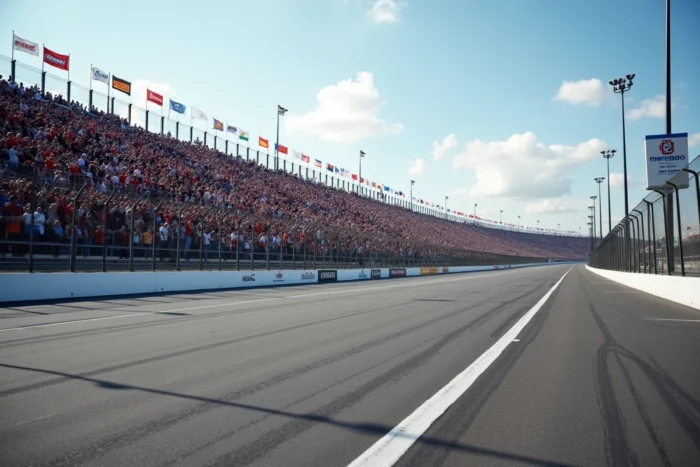
A NASCAR Cup Series race lasts between two and four hours of green flag, but a spectator’s day extends well beyond that. Understanding the stage structure, logistical constraints, and the actual pace of an event helps avoid classic mistakes for first-time visits to an American oval.
NASCAR Race Format and Time Management
Since the introduction of the segment format, each Cup Series race is divided into three stages. The Coca-Cola 600, held in Charlotte over 600 miles, is an exception with four segments. This segmentation profoundly alters the strategic reading: each stage end triggers a yellow flag, a redistribution of points, and an almost mandatory pit stop window.
The distance, not the clock, defines the length of an event. Most races cover 400 or 500 miles, at average speeds close to 240 km/h and peaks exceeding 320 km/h. The shortest on the calendar takes place at Martinsville, limited to 500 laps on a compact oval of 0.526 miles. The longest remains the Coca-Cola 600, which pushes the effort beyond 960 km.
We observe that the effective duration fluctuates mainly due to cautions. A multi-car accident on a superspeedway like Daytona or Talladega can generate prolonged caution periods, easily adding thirty to forty minutes to the overall clock. To know precisely how long a NASCAR race lasts, one must therefore factor in these variables to the raw track time.
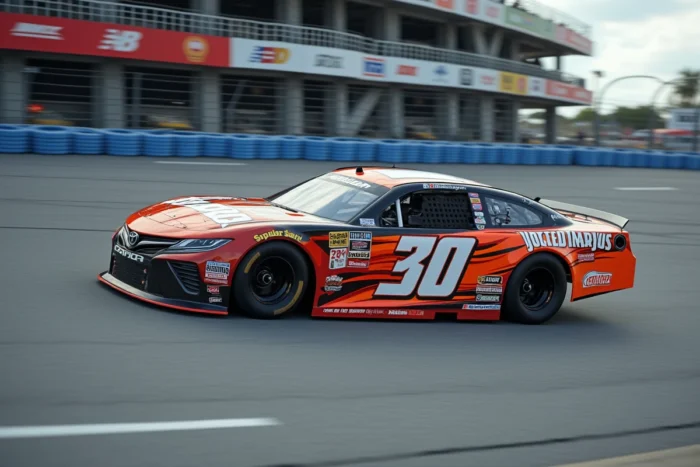
A Full Day for a NASCAR Spectator: From Gate Opening to Parking
The most common mistake for a first event is to calibrate their day around the green flag time. In reality, the gates of the tracks open several hours before the start. This window is not downtime.
Before the Race: Fan Zone and Pre-Grid
Most NASCAR tracks offer a full schedule starting in the morning: fan zone with simulators, car exhibitions, driver autograph sessions, and concerts. At New Hampshire Motor Speedway, the official guide emphasizes the importance of arriving early to enjoy these activities that disappear at the start time.
The pre-race ceremony (crew introductions, national anthem, military flyover) lasts about twenty minutes on its own. It is a codified ritual that is an integral part of the show.
During the Race: Pace in the Stands
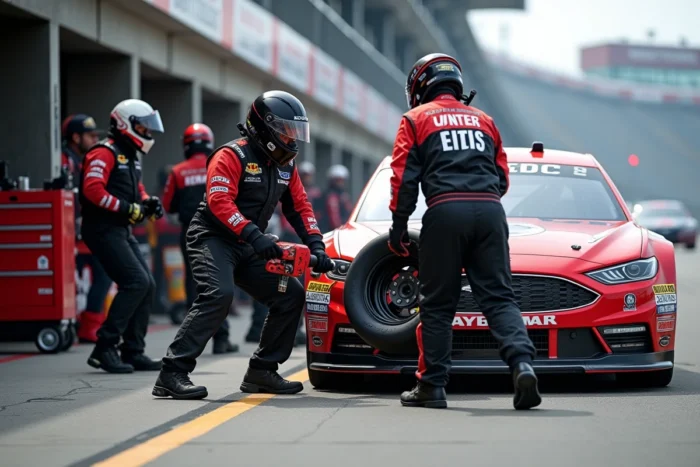
The breaks between stages provide natural breathing spaces. Spectators take advantage of this time to refuel, move around, or observe pit stop strategies from dedicated areas. The pace perceived in the stands is very different from that of a viewer at home: the noise, the heat radiated by the asphalt, and the physical proximity of the cars alter the perception of time.
After the Checkered Flag
Exiting the parking lot is often an underestimated time factor. At large ovals hosting over one hundred thousand spectators, evacuation can take more than an hour. We recommend allowing at least seven to eight hours between gate opening and returning to the vehicle.
On-Site Constraints for a First NASCAR Event
Noise is the most underestimated factor by new spectators. The stock cars of the Cup Series produce a noise level that makes hearing protection non-negotiable. Regular earplugs are sufficient, but noise-canceling headphones are preferable for comfort over several hours.
Here are the points to anticipate before heading to a track:
- Appropriate hearing protection: foam earplugs at a minimum, noise-canceling headphones recommended for children and prolonged exposure in the lower stands.
- Hydration and sun protection: most stands are uncovered, and summer races in North Carolina or Tennessee expose spectators to several hours of direct sunlight without shade.
- Walking distances: between the parking lot, fan zone, concessions, and stands, a spectator easily walks several kilometers throughout the day. Proper footwear drastically changes comfort.
- Cooler entry policy: most NASCAR tracks allow the introduction of soft-sided coolers of regulated size, a rare advantage in American professional sports that helps manage beverage and food budgets.
Duration Differences Between Cup Series, Xfinity, and Trucks
The lower series offer significantly shorter races. The Xfinity Series and Craftsman Truck Series events cover reduced distances, often between 150 and 300 miles. The race time then drops below two hours in most cases.
For a spectator hesitant to commit to a full day, attending an Xfinity race on Saturday offers a shorter introduction to the NASCAR format, with a driver lineup that regularly includes Cup regulars seeking additional track time.
A typical weekend combines several categories over two or three days: practice and qualifying on Friday, support race on Saturday, Cup event on Sunday. A complete NASCAR weekend represents an investment of two to three days for a spectator who wants to experience the entire program.
Banked Ovals and Road Courses: The Impact on the Show
The layout configuration alters both the duration and the perceived intensity. Superspeedways like Daytona and Talladega, with bankings reaching up to 33 degrees, encourage tight pack racing. Cars run bumper to bumper, sometimes three or four wide for several laps. The slightest contact can trigger chain-reaction accidents that extend the race through caution periods.
Road courses (Sonoma, Watkins Glen) produce shorter races in distance and duration, with fewer cautions but more braking and passing strategy in corners. The spectator discovers a very different register from traditional stock car racing.
Regardless of the type of track, the duration announced in the program never exactly reflects the actual time spent in the stands. Planning for extra time remains the best strategy for a first NASCAR event, where the experience consistently exceeds the strict confines of competition.