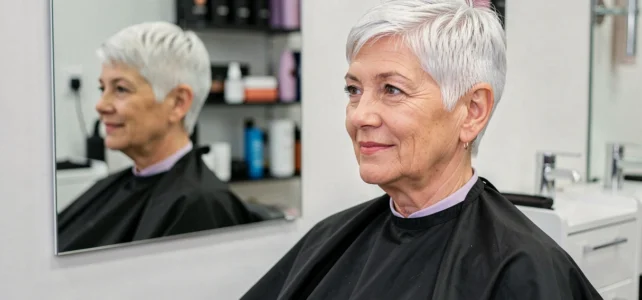
Transitioning from a long bob to a short cut after 55 or 60 years old is not just a matter of a radical haircut. Hair texture changes with age: loss of density, increased dryness, and modifications to the hairline. These factors influence the choice of hairstyle as much as the shape of the face or aesthetic preferences.
Hybrid Cuts After 60: Between Pixie and Bob, an Unexplored Territory
Hairdressing articles often present the transition as a binary choice: keep the long bob or switch to a pixie. This perspective overlooks a whole range of intermediate cuts designed for aging hair.
The bixie (a blend of bob and pixie) retains volume on top while exposing the nape. The shixie, a variant of the pixie with longer strands on the sides, allows for movement without the weight of a bob. The French soft crop, more textured, plays with internal layers that compensate for hair mass loss.
These hybrid formats offer a concrete advantage: they allow for a gradual transition. Instead of losing ten centimeters in one session, one can shorten in stages over two or three appointments, testing each step. Choosing a short cut for older women then becomes a process of adjustment rather than a leap into the unknown.
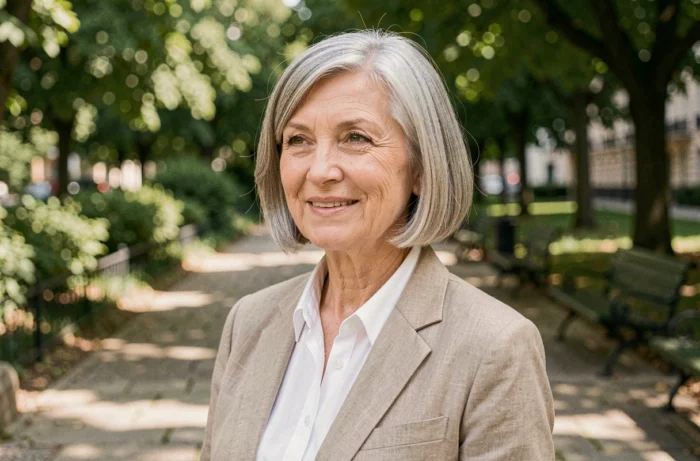
Fine and Fragile Hair: What the Cut Must Compensate For
After menopause, the hair fiber loses diameter and elasticity. A long bob on fine hair tends to weigh it down, which accentuates the impression of lack of volume. Transitioning to a short cut can correct this issue, provided one does not fall into the opposite trap: a cut that is too short, exposing the scalp where density has decreased.
Layers and Internal Texturing to Create Volume
A layered cut with internal texturing redistributes hair mass to the areas that need it. On a pixie or a bixie, the stylist can concentrate thickness on the top of the head and lighten the sides. The result gives a natural volume effect without resorting to teasing or heavy styling products.
The vinyl bob, a structured cut with clean lines and a slight curve, is one of the recent options for fine hair after 50. Its geometry creates an optical density effect even on sparse hair.
Curtain Bangs or Micro Bangs: Adapting the Face Framing
Curtain bangs remain an ally for softening features without weighing down the forehead. They adapt to most face shapes and work well on both short bobs and elongated pixies. However, the straight micro bangs require sufficiently thick hair to avoid looking sparse on the forehead.
- Oval face: almost all short cuts work, curtain bangs add movement without structural necessity.
- Round face: a layered cut that elongates the silhouette on top, combined with shorter sides, visually refines the features.
- Square face: soft layers around the jawline and a slightly asymmetrical fringe break the angularity.
Dermatological Precautions Often Overlooked During the Transition
Recommendations from the American Academy of Dermatology highlight a point that hair magazines rarely address: a radical color change combined with a short cut weakens the hair fiber. Bleaching and cutting short in one session subjects the hair to double stress, both chemical and mechanical.
On hair already weakened by age, it’s better to separate the two steps. Cut first, wait a few weeks, then adjust the color. Limiting the heat from styling tools (straighteners, blow dryers at maximum temperature) also protects the cuticle, which is already less resilient after 60.
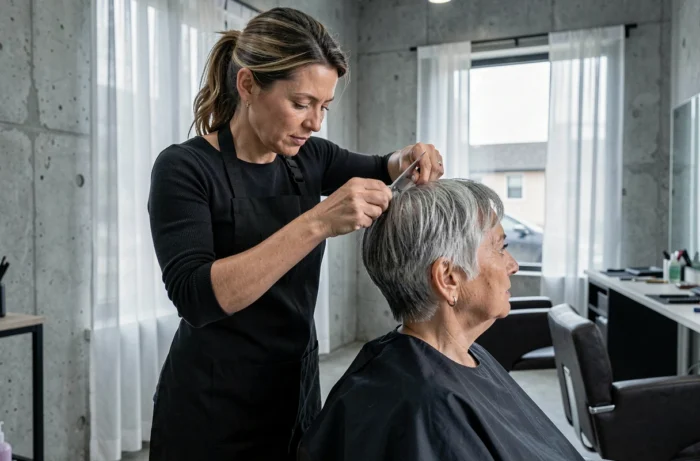
Another rarely discussed factor concerns medical treatments. Certain chemotherapies, hormonal treatments, or blood pressure medications alter the texture and growth rate. Informing the stylist about these treatments before the cut allows for technique adjustments: for example, avoiding excessive thinning on hair already weakened by treatment.
Maintaining a Short Cut After 60: Rhythm and Products
A short cut requires touch-ups every four to six weeks to maintain its shape. A long bob can tolerate two months of growth. This more frequent maintenance rhythm is a factor to consider before making a decision.
Regarding products, mature hair benefits from being washed less frequently. A gentle shampoo two to three times a week is sufficient. Lightweight leave-in treatments (texturizing sprays, anti-frizz serums) effectively replace volumizing styling mousses, which are often too drying.
- Light sea salt spray: adds movement and texture to a pixie or bixie without weighing it down.
- Small amount of hair oil: nourishes the ends and combats the dryness typical of aging hair.
- Thermal protective serum: necessary if you still use a blow dryer, even on low heat.
The question of daily styling weighs heavily in the decision. A well-cut short style can be styled in minutes, often with just fingers and a bit of product. This is a concrete argument for women who find their long bob increasingly difficult to style over the years.
The transition from a long bob to a short cut does not have a one-size-fits-all answer. The actual texture of the hair matters more than the shape of the face in the final choice. Testing an intermediate cut (bixie, shixie, textured short bob) before going for a full pixie remains the safest strategy to avoid regrets.