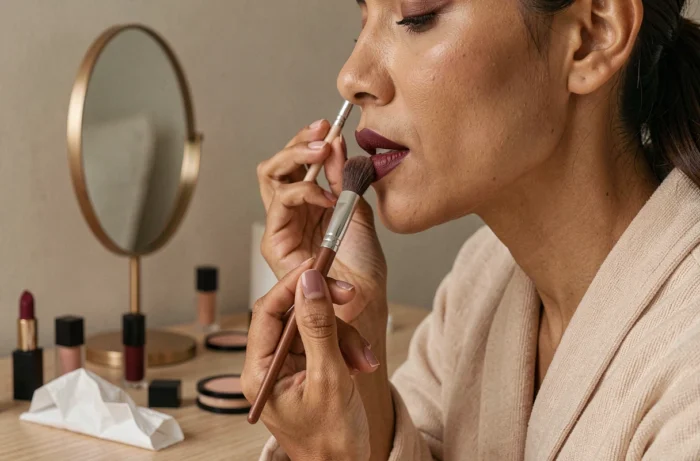
A satin lipstick lays a flexible film on the lips, loaded with emollient agents and pigments suspended in an oily base. This film reflects light, giving the characteristic shiny appearance. Transforming this finish into a matte look involves neutralizing this light reflection without removing the color or drying out the lips.
Why a satin lipstick doesn’t last like a matte
The difference between a satin finish and a matte finish lies in the proportion of fatty substances in the formula. A satin contains more oils and emollient waxes, which keep the film flexible yet mobile. The color glides, migrates into fine lines, and transfers with the slightest contact.
A matte lipstick, on the other hand, dries on the surface after application. The pigments adhere to the skin of the lips because the volatile solvents in the formula evaporate. The result: less transfer and extended wear, but often a feeling of tightness.
When looking for tips for converting satin lipstick to matte, the goal is to replicate this surface fixation without changing products, using techniques that absorb excess oil while maintaining the initial comfort of the formula.
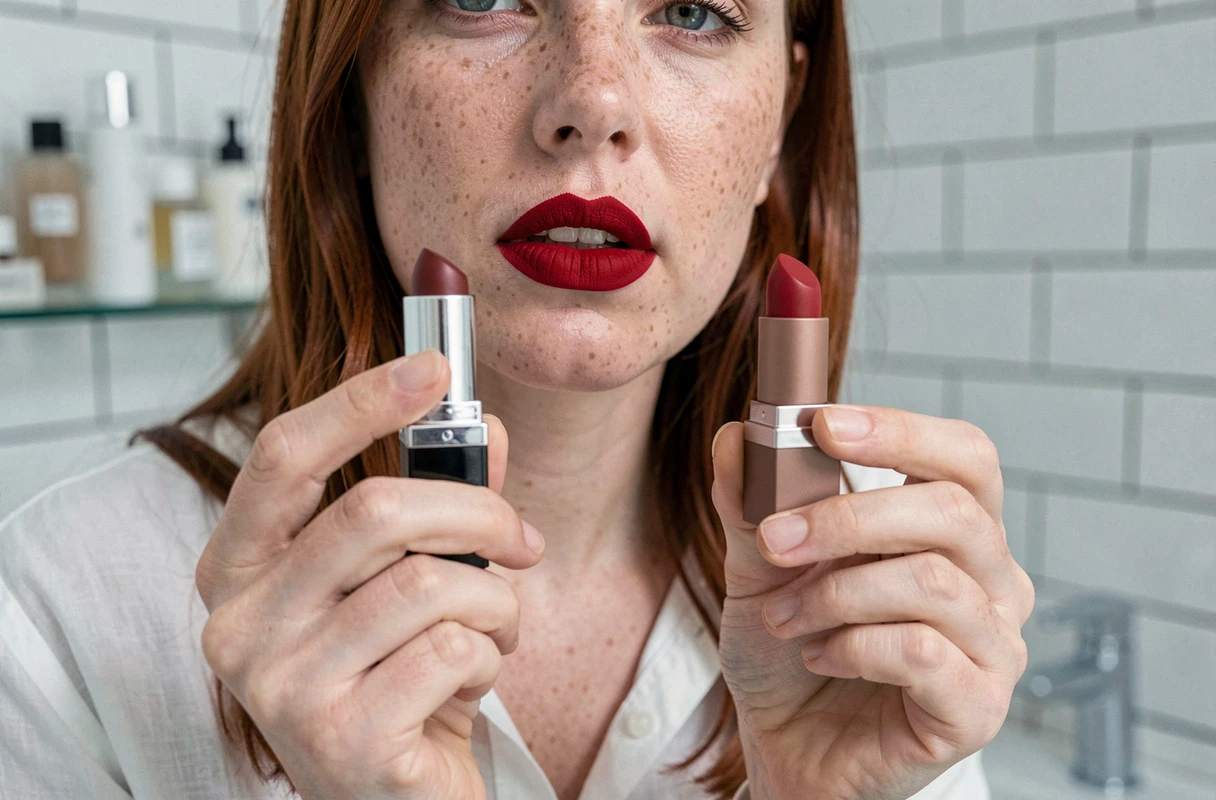
Lip primer: the base for color adhesion
Applying a lip primer before lipstick is a step often overlooked. This product creates a smooth and slightly adhesive surface on which the color adheres better.
The primer fills in micro-fine lines and absorbs some of the natural sebum. The color no longer migrates outside the lip line. This step alone does not transform a satin into a matte, but it prepares the ground for the subsequent techniques to work fully.
Choosing the right type of primer
A mattifying silicone-based primer is better suited than a classic moisturizing balm. The balm adds oil, which goes against the objective. The mattifying primer, on the other hand, lays down a dry veil that facilitates pigment adhesion.
Application is done with the fingertip, in a thin layer, a few seconds before applying the lipstick. Too much product creates a sliding effect that prevents the color from setting.
Translucent powder technique to mattify lipstick
The most reliable method to achieve a long-lasting matte finish from a satin lipstick relies on translucent loose powder. The principle is simple: the powder absorbs surface oils and eliminates shine.
Three-step application
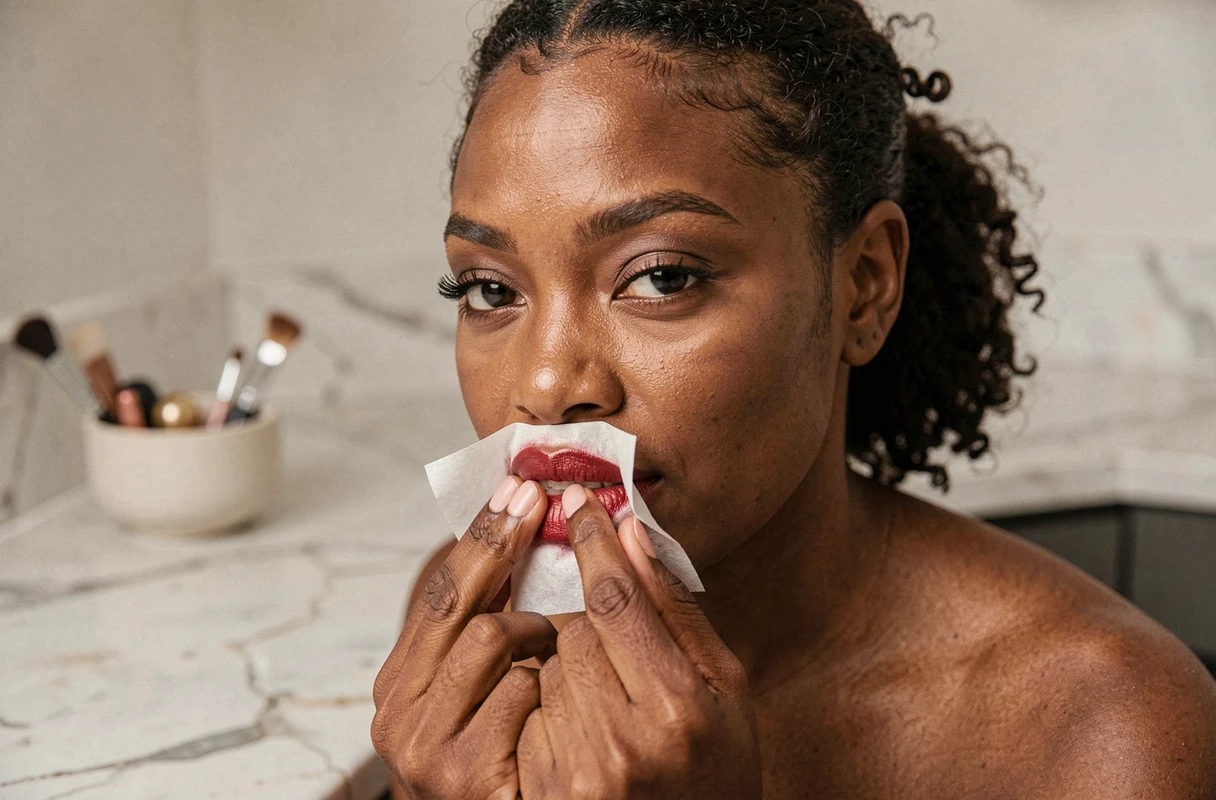
- Apply satin lipstick normally, then press a tissue against the lips to remove excess oil without taking off the color
- Place a thin layer of tissue over the lips and dab translucent loose powder through the fabric with a brush, so the powder settles in a uniform veil without thickening the result
- Remove the tissue and gently press the lips together to blend the powder into the color
The tissue acts as a filter. Without it, the powder applied directly risks creating visible clumps that whiten the shade. With the filter, only the finest particles pass through and absorb the oily film on the surface.
Translucent powder or setting powder
Classic translucent powder works on all shades without altering the color. Setting powders sometimes contain film-forming polymers that further enhance wear. Both are suitable, but translucent powder remains the safest choice to avoid changing the lipstick shade.
Lip pencil and layering: locking in color
The lip pencil is not just for outlining. Used over the entire lip surface before lipstick, it creates a dry, pigmented layer that serves as an anchor.
The waxy, matte texture of the pencil acts as a base. The satin lipstick applied over it adheres to this base instead of sliding directly on the skin. The color lasts significantly longer, and the final result leans towards matte even before the powder step.
Layering for a transfer-proof result
The most effective combination involves layering four steps in this order:
- Mattifying lip primer in a thin veil
- Matching lip pencil applied over the entire surface, not just the outline
- Satin lipstick, a thin layer with a brush for controlled application
- Dabbing with a tissue, then translucent powder through the fabric
This layering absorbs oil at each level. The result is a comfortable matte finish that doesn’t pull on the lips, because the hydration from the satin remains trapped under the absorbent layers.
What reduces the wear of an improvised matte finish
Applying a greasy balm or gloss over the mattified color cancels out the work. Oily substances dissolve the powder layer and remobilize the pigments. The color becomes slippery again and transfers.
Similarly, applying too thick a layer of satin lipstick from the start complicates the conversion. The thicker the film, the more oily material it contains to absorb. A thin layer with a brush gives a better result than direct application from the tube, which usually deposits too much product.
The choice of shade also plays a role. Highly pigmented colors (deep reds, burgundy, plum) tolerate powder better than light or pearlescent shades. On a light nude, the powder can slightly veil the color and give an unflattering powdery look.
One last point to remember: the wear of an improvised matte remains inferior to that of a formula designed to be matte from the start. The technique extends wear by several hours and eliminates shine, but a hearty meal will eventually compromise the result, where a true liquid matte would hold up better.