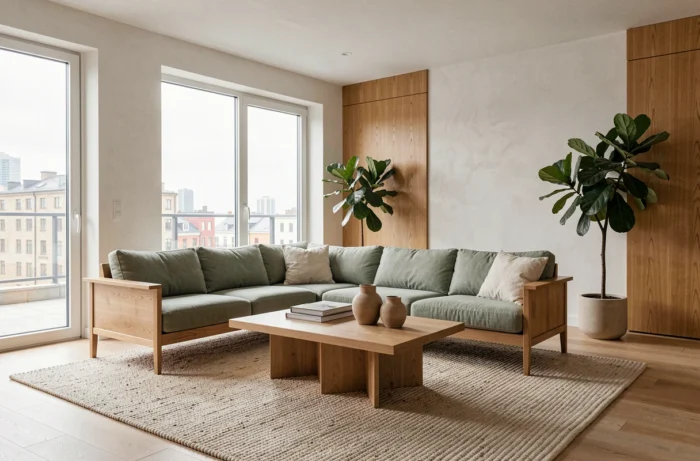
The French market for furniture and decoration is undergoing a period of restructuring. Sales have stabilized after several years of turbulence, but purchasing behaviors are changing profoundly. Young households are opting against large furniture, international platforms are capturing an increasing share of budgets, and regulations are pushing sectors towards reuse. Behind the word “decoration,” economic realities and concrete choices diverge significantly depending on profiles.
Fast decor and international platforms: what is dragging the market down
Recent sector analyses point to a clear increase in fast decor in France. The phenomenon is based on low-commitment purchases, quickly renewed, often made on platforms like Amazon or Temu. Physical discounters are participating in the same movement.
This dynamic primarily affects households with constrained purchasing power. The reflex is to buy a low-cost decorative item rather than invest in durable furniture. Second-hand goods are also capturing an increasing share of spending, blurring the line between new and used in the decor segment.
The result is a two-speed market. On one side, brands and artisans defending a qualitative positioning on materials like solid wood or certified textiles. On the other, a constant flow of fast-moving products, whose lifespan rarely exceeds a few seasons. To explore collections that prioritize sustainability and style, a useful resource is: https://www.la-maison-de-daniel.fr/, which offers furniture and decoration in this logic.
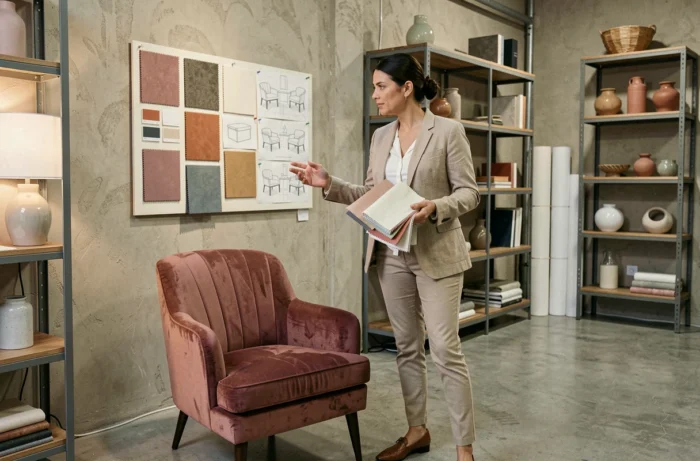
Furnishing furniture and young households: why 25-39 year-olds no longer buy the same way
A study presented at the IPEA conference reveals a fundamental change among 25-39 year-olds. This age group, in the midst of equipping their interiors, is significantly more inclined to leave walls free than previous generations. The fear of “cluttering the space” dominates.
Several factors explain this decline in furnishing furniture. Living spaces are smaller, glass walls are more frequent, and the desire to maintain clear circulation hinders the purchase of bulky buffets, bookshelves, or cabinets.
What this changes for the layout of the living room and bedroom
The living room is refocusing around the sofa and a reduced number of pieces. Multifunctional furniture is gaining ground: coffee tables with integrated storage, extendable consoles, modular shelves. In the bedroom, the bed and one or two storage units are sufficient for many young buyers.
This simplicity does not exclude wall decoration or objects. Field reports diverge on this point: some professionals observe that “decorative object” budgets are increasing as “furniture” budgets decline, while others note an overall reduction in furnishing expenses. The available data does not allow for a definitive conclusion.
- Modular furniture replaces fixed furniture, especially in spaces of less than 40 m²
- Natural materials (wood, linen, rattan) remain sought after, but in compact formats
- Lighting and textiles (cushions, curtains, rugs) become the primary vectors for personalizing a space
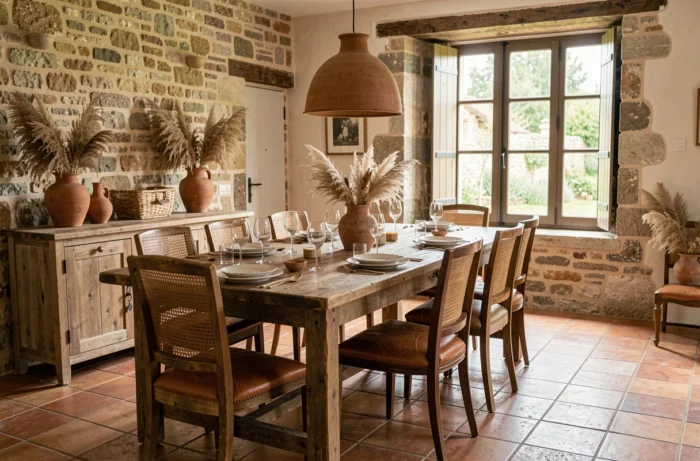
AGEC Law and furniture: regulatory constraints weighing on the sector
The AGEC law now prohibits the destruction of unsold goods in the furniture sector. This measure, combined with progressive quotas for reuse and recycling in public purchases, is reshaping distribution circuits.
For manufacturers and distributors, the obligation to valorize unsold stocks entails additional logistical costs. Brands must organize the collection, reconditioning, or donation of unsold products. Public purchases, for their part, are gradually integrating reuse criteria into their calls for tenders.
Textile labeling and traceability: what changes for the consumer
French regulations on textile composition require labeling in French indicating the fibers used and their proportion. For interior decoration (cushions, curtains, throws), these obligations apply just as they do for clothing.
Traceability of the country of manufacture is also progressing due to regulations. Consumers purchasing a cushion or throw can verify the declared origin, even if controls remain uneven across sales channels. International platforms are regularly pointed out for shortcomings in this area.
- Unsold furniture can no longer be destroyed: they must be donated, reconditioned, or recycled
- Public purchases integrate reuse quotas for office and equipment furniture
- Textile labeling remains mandatory for any product sold in France, including online
Decoration trends 2026-2027: style choices that withstand rapid renewal
Decoration trends for the 2026-2027 season confirm a return to raw materials and neutral tones. White, beige, and earthy tones dominate the new collections of furniture and decorative objects. Wood, whether light or dark, remains the reference material for interior design.
The cozy style, often cited by professional decorators, relies on the controlled accumulation of textiles: thick rugs, cushions in natural materials, linen or wool throws. In contrast, the trend towards minimalism among young buyers limits this accumulation to a few chosen pieces.
Lighting is taking an increasingly prominent role in layouts. Decorative fixtures (natural fiber pendants, ceramic lamps) function as full-fledged style elements, on par with a piece of furniture or a painting. A well-chosen light fixture transforms a room more than a change of paint.
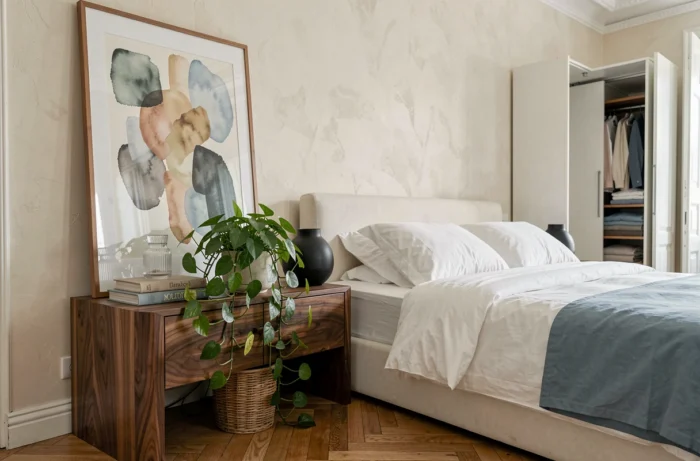
The market for decoration and furniture in France is structured around concrete tensions: fast decor versus durability, large furniture versus open spaces, creative freedom versus regulatory framework. The most relevant choices for enhancing an interior rely less on following trends and more on a careful reading of one’s own space, surface constraints, and materials that age well.