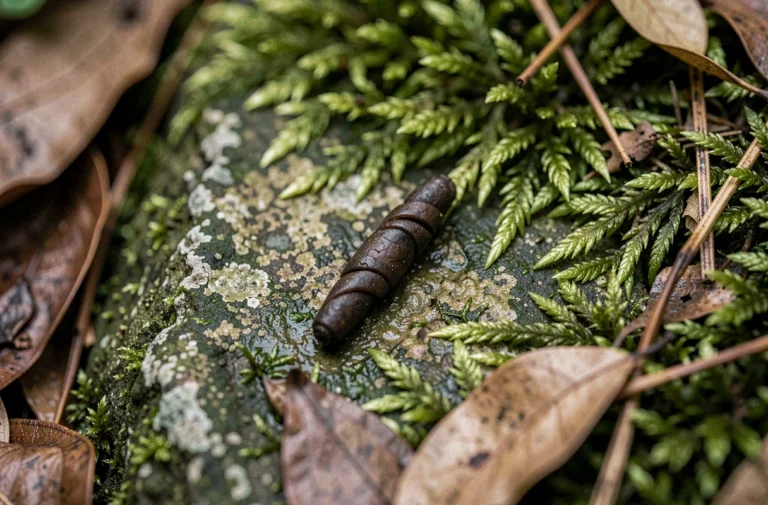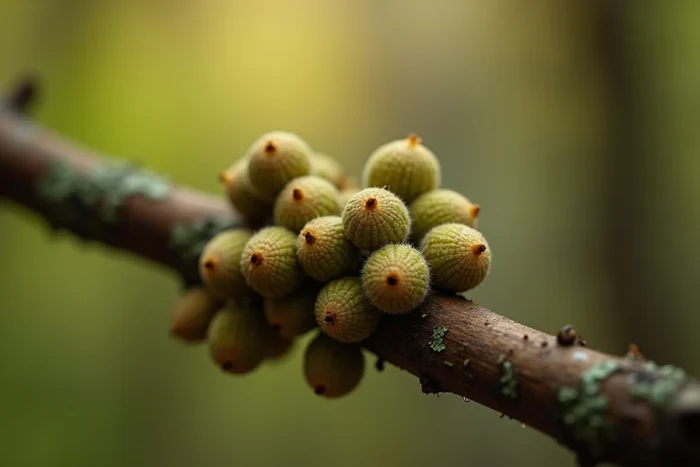
Oak galls, these spherical or irregular growths caused by cynipid wasps, contain no toxic substance for humans. Their handling does not cause burns, skin irritation, or systemic reactions. Therefore, oak galls do not pose a health risk in themselves, but the confusion with other organisms present on the same tree poses a real problem for allergic individuals.
Cross-reactivity of oak pollen and sensitization to galls
The oak belongs to the Fagaceae family and produces allergenic pollen classified among anemophilous pollinating trees. Individuals sensitized to oak pollen often show cross-reactivity with birch, alder, and hazel, all members of the Fagales order. This immunological relationship means that someone allergic to oak frequently reacts to several tree species without knowing it.
The galls themselves do not release pollen. However, their massive presence on an oak indicates a vigorous tree, often in full pollen production. An allergic individual approaching an oak bearing galls to observe or remove them is exposed to residual pollen deposited on the leaves, twigs, and the surface of the galls.
We recommend not handling galls with bare hands during the pollen season (March to May depending on the regions) and wearing a filtering mask if contact is prolonged.
A point rarely addressed in popular articles about the oak gall danger for humans concerns tannins. Oak galls, particularly those produced by Andricus kollari, concentrate gallotannins in quantities far exceeding those found in wood or bark. Prolonged contact with the sap released by a crushed gall can cause contact dermatitis in individuals sensitive to tannins, even without associated pollen allergy.

Oak processionary caterpillars: the real risk to distinguish from galls
The most dangerous confusion concerns nests of oak processionary caterpillars (Thaumetopoea processionea). These silky, whitish nests, fixed to branches or the trunk, are often confused with large galls by untrained observers. The health consequences are not comparable.
The stinging hairs of processionary caterpillars contain thaumetopein, a protein that triggers skin reactions (hives, intense itching), eye irritations (conjunctivitis), and respiratory issues that can lead to bronchospasm in asthmatics. These hairs detach easily and remain active for several months in the environment: soil, garden furniture, laundry hung nearby.
In 2024, several French regions, notably Hauts-de-France, reported a significant increase in processionary caterpillar populations, favored by heatwave episodes. For an allergic person, the simultaneous presence of galls and processionary nests on the same oak multiplies the risks of accidental exposure.
Visual criteria to differentiate galls and processionary nests
- The gall is a woody or fleshy growth, directly integrated into the plant tissue (leaf, bud, twig). It is smooth or slightly bumpy, green, brown, or reddish in color depending on the cynipid species.
- The processionary nest is a mass of white or grayish silk, laid on the surface of the bark or at the junction of branches. It is not fused with the wood and partially detaches under the effect of the wind.
- In case of doubt, never touch the growth with bare hands. The stinging hairs of the processionaries may be present on adjacent branches, even without a visible nest nearby.
Allergy diagnosis and actions to take in case of skin lesions
Itching and skin lesions occurring after contact with an oak bearing galls warrant a medical consultation, not for the gall itself, but to identify the actual allergen involved. The doctor usually conducts a targeted interview about the exposure context: season, duration of contact, location of lesions, atopic history.
An allergy assessment through prick tests helps distinguish sensitization to oak pollen from contact dermatitis to tannins or a reaction to processionary hairs. This distinction guides treatment in a radically different way.
- Confirmed pollen allergy: oral antihistamine treatment, possibly nasal corticosteroids during the season, and long-term desensitization may be possible.
- Contact dermatitis to tannins: avoidance of contact, application of an emollient cream, local dermocorticoid on prescription if lesions persist.
- Reaction to processionary hairs: abundant washing of skin and clothing, antihistamine, emergency consultation if respiratory distress or swelling occurs.
Managing oak in the garden for sensitized individuals
We observe that most allergic reactions related to oak occur during pruning, leaf collection, or close observation of galls. Some precautions significantly reduce the risk of exposure without requiring the tree to be cut down.
During the pollination period, postpone pruning of lower branches. If intervention is necessary, wear long gloves, long sleeves, and an FFP2 mask. After pruning, shower and wash clothes at high temperature to eliminate pollen and any potential processionary hairs.
Galls fallen to the ground do not pose a significant allergic risk once dry. Their collection in autumn can be done without special precautions, except in areas infested by processionaries where wearing gloves remains prudent.
The presence of galls on an oak does not justify any phytosanitary treatment. The cynipids that produce them do not threaten the tree’s survival, and insecticides sprayed on the foliage would also destroy natural parasitoids (Torymus, Megastigmus) that regulate cynipid populations. Chemically treating an oak bearing galls worsens the problem in the medium term by removing biological regulation.