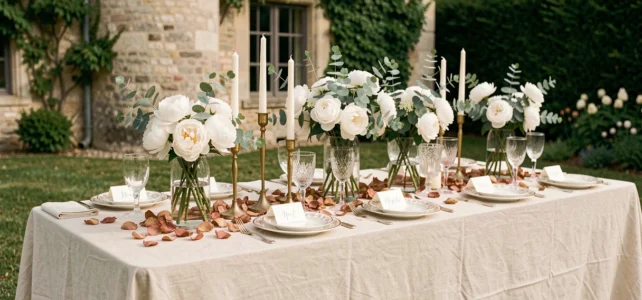
A successful wedding often relies on a few well-placed decorative choices, not on an accumulation of elements. Wedding decoration sets the tone for the day from the moment the guests arrive: it tells a story, that of the couple, through materials, colors, and a coherent staging. Instead of listing dozens of ideas, let’s focus on the choices that truly make the difference between a beautifully decorated venue and a place where every detail seems obvious.
Eco-luxury and sustainable wedding decoration: the new standard
For several years now, an underlying trend has been transforming the way high-end wedding decoration is conceived. We speak of eco-luxury: an elegant scenography that integrates sustainability criteria without sacrificing refinement.
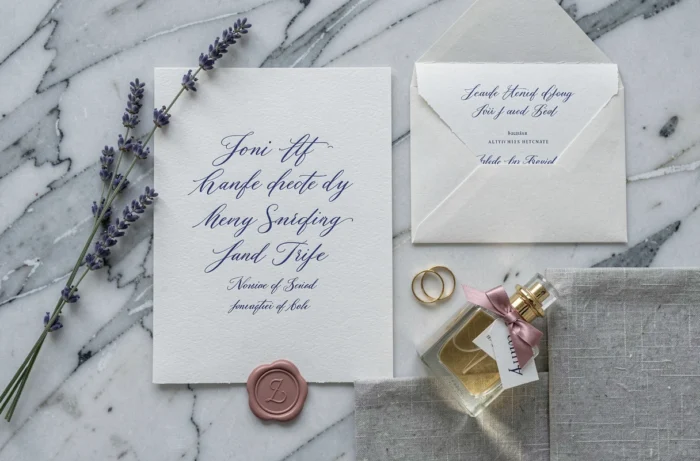
In practical terms, this involves simple yet structural choices. Flowers are local and seasonal, arranged in installations that can be reused or given to guests at the end of the evening. The stationery is printed on seeded paper, which guests can plant at home after the celebration. The menus highlight short supply chains, in a “farm-to-table” logic.
Eco-luxury is not just an isolated ecological gesture. It is a common thread that connects the table, the venue, the flowers, and the stationery in a cohesive manner. A centerpiece made of local pottery filled with grasses from the neighboring garden can be more appealing than an arrangement imported at great expense.
Are you looking for vendors who master this balance between elegance and commitment? Browsing the decoration on Mon Plus Beau Mariage allows you to find professionals who work in this direction.
Color palette for an elegant wedding: building a visual harmony
The choice of colors is the first decorative lever. Before thinking about objects, one must think about shades. Have you ever noticed that a memorable wedding often has a limited palette, two or three colors used throughout?
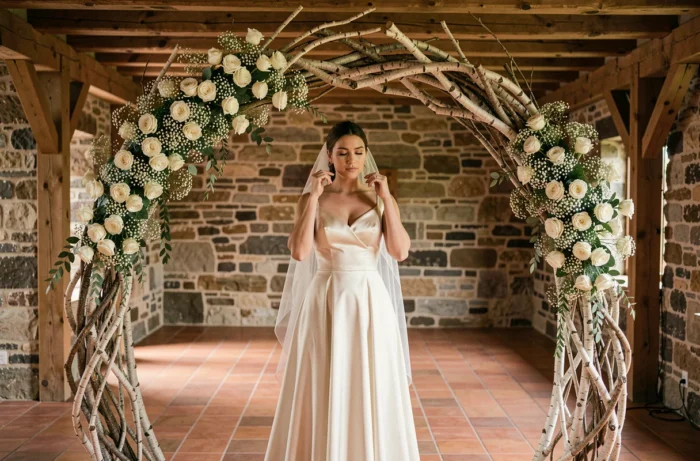
Three colors maximum, used across all supports. This is the most effective rule for creating a coherent atmosphere. A neutral base (off-white, linen, golden beige) combined with one or two accent shades is sufficient.
- Pastel tones (powder pink, sage, glacier blue) work well for spring and summer weddings, especially outdoors where natural light enhances them.
- More saturated palettes (terracotta, burgundy, forest green) are suitable for autumn ceremonies and add visual depth to stone or wooden venues.
- Bold two-color combinations (black and white, navy and gold) create an immediate graphic effect, suitable for contemporary spaces or urban lofts.
A common mistake is to choose colors on a screen, only to discover on the big day that the rendering differs under the venue’s lighting. Requesting fabric samples, testing shades in the reception hall at the expected dinner time: these checks prevent unpleasant surprises.
Micro-wedding and intimate decoration: scenographing a private space
Weddings celebrated at home or in a private garden, for groups of thirty to sixty guests, have been multiplying over the past few seasons. This format radically changes the decorative approach.
In a classic reception hall, the decoration must fill a large volume. In an intimate setting, every decorative element is seen up close and must withstand scrutiny. The quality of materials takes precedence over quantity. A wrinkled linen table runner, a few candles in blown glass holders, mismatched but carefully chosen tableware: this level of detail is possible when decorating for five tables, not thirty.
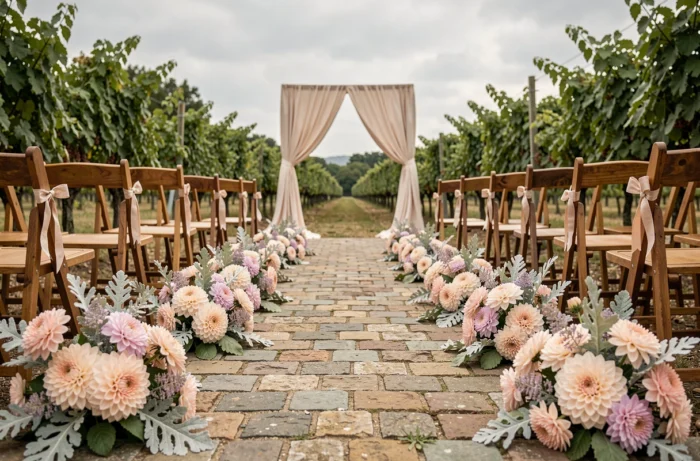
Scenography over several days is another feature of micro-weddings. The venue evolves: casual brunch in the morning, ceremony in the afternoon, candlelit dinner in the evening. The decoration must be able to transform without being entirely dismantled. Planning modular elements (string lights that transition from the garden to the hall, floral arrangements that move from the ceremony to the table) makes this transition smooth.
Lighting and staging: what truly transforms a reception hall
Light is probably the most underestimated decorative element. Two identical halls, decorated with the same flowers and table linens, will yield completely different results depending on their lighting.
Why is this choice so crucial? Because light defines the atmosphere far more than the objects placed on the tables. A white neon light from a banquet hall will ruin the most beautiful scenography. Conversely, warm and dim lighting will enhance even a simple decoration.
Here are some concrete guidelines for working with light during a wedding:
- String lights with filament bulbs, stretched in a crisscross pattern above the tables, create a luminous ceiling that visually reduces the height of the hall and makes it cozier.
- Candles (pillar, tealight, candelabra) bring movement and warmth that electric light cannot replicate, provided they are placed in sufficient quantity.
- Adjustable spotlights can highlight a specific focal point: the ceremony arch, the couple’s table, the cake. Without them, these elements blend into the decor instead of standing out.
- Lanterns on the ground, along an aisle or at the entrance of the venue, guide guests and set the mood even before they see the hall.
Testing the lighting in the actual venue, at dinner time, remains the best way to adjust the setup. Inspiration photos often show scenes captured during golden hour, outdoors. The reality of a closed hall at nine PM in November is quite different.
One last point rarely addressed: the color of the light. Bulbs below 2700 kelvins give an orange hue that flatters skin tones and fabrics. Above 4000 kelvins, the atmosphere turns clinical. Checking this specification on strings and spotlights before purchase prevents having to change everything the night before the wedding.
The decoration of a wedding does not need to be spectacular to leave a lasting impression. A well-mastered color palette, thoughtfully designed lighting, carefully chosen materials, and coherence between the venue, theme, and table details are enough to create an environment that guests will remember for a long time.