The animal world is not just a collection of identity cards sorted alphabetically. Behind each species lie biological mechanisms, survival strategies, and social interactions that challenge what we believe we know about the boundary between instinct and learning. This panorama of life is enriched each year by discoveries that force biologists to revise their models.
When European regulation redefines the relationship with pets
In June 2025, the European Parliament adopted the first harmonized EU standards on the breeding, housing, traceability, and reproduction of dogs and cats. The implementation is scheduled to be phased in starting in 2028.
Among the most significant measures: a strict limitation on breeding imposes a minimum age of ten months for cats and at least the second heat cycle for female dogs, with a maximum of three litters over two years followed by a mandatory year of rest. Non-medical mutilations (ear cropping, tail docking, claw removal) are prohibited, as is the selection of hypertypes, those exaggerated physical traits that generate chronic pathologies.
Identification by microchip will gradually become mandatory for all dogs and cats, including those owned by individuals, with registration in interoperable national databases. It will also be prohibited to keep a dog or cat in a container, to tie an animal for more than one hour without medical necessity, or to use prong collars and choke collars without safety features.
These provisions mark a turning point in how European law considers animal sensitivity. They also illustrate how knowledge of the behaviors and physiological needs of domestic species directly informs the creation of law. Exploring animals on Planète Animaux allows one to appreciate the extent of this diversity, far beyond just dogs and cats.
Sperm whales and cephalopods: learnings that challenge classical models
The idea that only primates and a few birds are capable of complex social learning has been seriously challenged in recent years. The great sperm whale provides a striking example.
A study published in the journal Biology Letters showed that North Pacific sperm whales, victims of whaling since the 18th century, developed a specific tactic against whalers in the 19th century. Effective defense techniques against their natural predator, the orca, did not work against harpoons. The sperm whales then began to swim quickly against the wind, making pursuit by sailing vessels extremely difficult. This strategy was passed down to subsequent generations.
What distinguishes this case is the speed of adaptation. Within a few decades, a new behavior spread throughout entire populations, suggesting cultural transmission rather than simple genetic selection.
Cephalopods: a distributed brain
In cephalopods (octopuses, cuttlefish, squids), cognitive abilities take an even more puzzling form. These animals possess a partially decentralized nervous system: a large portion of the neurons is located in the arms, not just in the central brain. Controlled environment experiments have shown that octopuses solve mechanical problems (opening a jar, disassembling a mechanism) without prior training.
The available data do not allow us to conclude whether these abilities involve a form of consciousness comparable to that of mammals, but they raise a fundamental question about the diversity of neural architectures capable of producing flexible behaviors.
Animal personality: when each individual matters
Contemporary ethology increasingly recognizes that animals are not interchangeable within a species. Research on fish has highlighted that each fish has its own personality, with profiles that are more or less daring, sociable, or exploratory. This observation, once reserved for mammals, now extends to invertebrates and fish.
In macaques, a particular behavior has been documented: some groups prefer to steal objects that have exchange value with humans (glasses, phones) rather than food. This choice implies an evaluation of the relative value of objects and an anticipation of human reaction, which far exceeds mere feeding reflex.
- Japanese macaques make and manipulate snowballs without apparent food or defensive purpose, a behavior interpreted as social play.
- Some songbirds gradually lose the complexity of their song in urbanized areas, likely due to noise pollution disrupting vocal learning in the young.
- Dolphins use marine sponges attached to their rostrum to probe the seafloor without injuring themselves, a tool passed down from mother to daughter over several generations.

Species classified as pests in France: a debate far from settled
The management of species likely to cause damage (ESOD), formerly known as “pests,” is subject to regular public consultations in France. Before each new decree, a consultation allows citizens and stakeholders to express their views on the list of affected species and the methods of regulation.
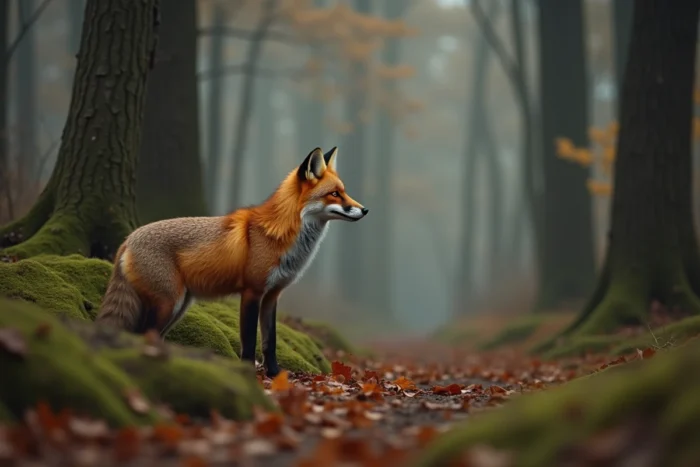
The very term “pest” is contested by part of the scientific community and animal protection associations, which emphasize that the ecological role of a species often exceeds the damage it causes locally. The fox, for example, regulates rodent populations and limits the spread of certain diseases. Field reports on this point diverge between farmers and ecologists.
In contrast, the question of the wolf illustrates a different tension. The French Senate recently proposed to strengthen defensive shooting in response to the increase in attacks on livestock. The European framework, via the Bern Convention, protects the wolf as a strictly protected species, which limits national maneuvering room. CITES (Convention on International Trade in Endangered Species) regularly updates the list of species protected globally.
These decisions show that the discovery of the animal world is not limited to biology. Every management decision relies on a state of behavioral and ecological knowledge that evolves with the pace of scientific publications and economic pressures. The boundary between protected species and regulated species remains fluid, and scientific data do not always provide unambiguous answers to conflicts of use.