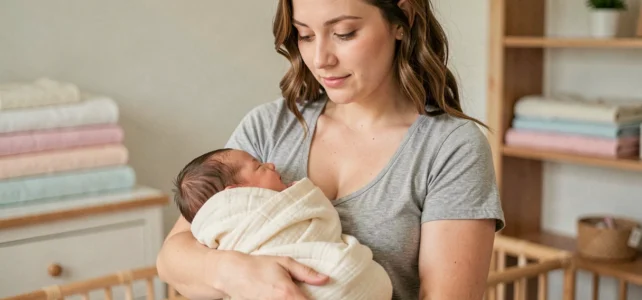
The birth of a child profoundly changes the daily life of a household. Welcoming a baby calmly requires understanding a few concrete guidelines rather than just multiplying purchases: safe sleep, mental health of parents, truly useful equipment. Recommendations evolve quickly, and several recent devices are changing the game for young parents in France.
Safe Sleep for Newborns: What Recent Recommendations Say
The sleeping arrangements for infants remain one of the topics where family practices diverge the most from health recommendations. The HAS recommends placing the baby on their back, on a firm mattress, in a crib without bumpers, comforters, or pillows, ideally in the parents’ room during the first months.
These French recommendations largely align with those of the AAP (United States) and the NHS (United Kingdom), although differences do exist. For example, Anglo-Saxon authorities emphasize room-sharing without bed-sharing, whereas the HAS takes a more nuanced view on supervised co-sleeping. International guidelines on safe sleep converge on one point: a stripped-down sleeping environment significantly reduces risk.
Among common mistakes, the use of nests or bed reducers continues to be widespread despite the lack of validation by health authorities. Field reports vary on this point, with some maternity professionals tolerating them in practice, while others formally advise against them.
For the concrete preparation of the sleep space, on specialized shops like 123 Baby Boom !, parents can identify items that comply with current standards before the birth.

Mental Health of Young Parents: The Parenting Journey in France
Classic content on birth preparation briefly mentions the baby blues. The clinical reality is more complex. Since 2022, the early postnatal check-up between the fourth and eighth week after childbirth has been standardized in France. It aims to identify signs of postpartum depression in both the mother and the co-parent.
A second check-up, possible between the tenth and fourteenth week, may be offered when risk factors are identified. This system is part of a structured parenting journey, coordinated by regional perinatal networks, with a dedicated project manager in each region to guide towards psychologists, psychiatrists, or mother-baby units.
This framework changes the expected stance of parents. Consulting a mental health professional in the postpartum period is no longer an exceptional step: the mental health of parents is now part of standard perinatal follow-up. Knowing that these check-ups exist, that they are reimbursed, and that they also concern the second parent allows for anticipating this step just like a pediatric consultation.
Baby Registry and Equipment: Avoiding Unnecessary Purchases
Standard lists circulated by childcare websites often contain several dozen items. In practice, a significant portion of these purchases is used little or not at all during the first weeks.
The equipment actually needed on a daily basis in the first months boils down to a limited number of items:
- A compliant bed (crib or cot with a firm mattress), without unnecessary bedding accessories, used from the return from maternity
- A reasonable amount of clothing (onesies, pajamas, hats) in newborn and one-month sizes, knowing that growth quickly renders the smallest sizes obsolete
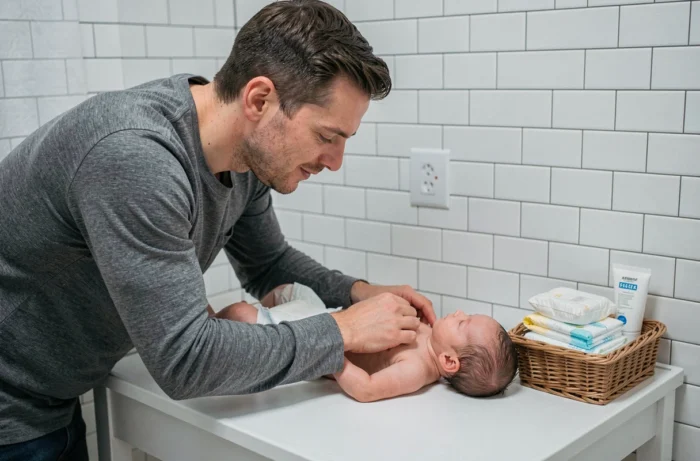
- The changing essentials (stable changing table or pad, diapers, liniment or suitable cleaning product) and a bath thermometer
- A means of carrying or a stroller suitable for outings from the first weeks
Developmental equipment is not a priority for several weeks. A newborn primarily interacts with faces and voices. Play gyms, activity mats, and rattles find their usefulness later.
Breastfeeding or Bottle-Feeding: Preparing Without Pressure
The choice of feeding method remains personal. What matters for preparation is having the corresponding equipment on hand before childbirth. For breastfeeding, a few pads, a possible breast pump, and the contact details of a lactation consultant are sufficient. For bottle-feeding, sterilized bottles and a stock of first-stage infant formula cover the first few days.
However, buying both in large quantities “just in case” often leads to unnecessary expenses. Waiting until after returning from maternity to adjust purchases avoids stocking equipment that will not be used.
Maternity Bag and Steps Before Birth
The maternity bag should ideally be prepared around the thirty-fifth week of pregnancy. Maternity hospitals generally provide a list, but some items are consistently forgotten: administrative documents (health insurance card, family record book, or early recognition), comfortable clothing for the mother’s stay, and an initial outfit for the baby’s return trip.
Regarding procedures, the birth declaration must be made within five days of childbirth. Maternity leave and paternity leave (or second parent leave) must be declared to the employer in advance, as well as the request for a daycare spot, which varies greatly in registration deadlines depending on the municipality.
Temperature and Safety of the Room
The baby’s room should ideally be maintained at a moderate temperature, around eighteen to twenty degrees. A simple hygrometer allows monitoring of humidity levels. Daily ventilation of the room remains the most effective measure for maintaining good air quality, well before purchasing an air purifier.
The first months with an infant test sleep, organization, and couple relationships. Having the right equipment, knowing the postpartum follow-up systems, and being willing to adjust choices over the weeks provides a stronger foundation than any exhaustive list.