The fashion accessories market is undergoing profound changes. Seasonal trends are no longer just a parade of new colors or novel shapes. Behind the stylistic choices, regulatory constraints, material developments, and changes in shopping habits are reshaping what “trendy accessory” means this season.
Digital Product Passport: What Changes for Fashion Accessories
The European regulation on product ecodesign (ESPR) aims to make the digital product passport (DPP) mandatory for the textile sector starting from the spring-summer 2028 collections, with an extension to footwear and leather goods expected around 2030. This deadline, still little mentioned in style guides, will transform how brands design and market bags, belts, and small leather goods.
Each product will need to integrate structured data accessible via QR code, NFC, or RFID. This data will cover the materials used, reparability, and environmental performance. In case of non-compliance, sanctions could include market withdrawal.
For consumers, this means that a bag or a pair of sunglasses purchased in a few seasons will carry a traceable identity card. Brands that anticipate this requirement are already rethinking their supply chains. Those that focus on transparency could gain a competitive advantage, while feedback from the field varies on the ability of smaller brands to absorb the cost of compliance.
Among the new arrivals on Belle et Élégante, several ranges already reflect this focus on material traceability and the durability of finishes.

Sustainability and Ecodesign: A Style Criterion in Its Own Right
Sustainability is no longer a peripheral marketing argument. Trend analyses for this season place the circular economy and ecodesign at the center of expectations, including in the accessories segment. A piece of jewelry, a bag, or a pair of shoes is now also judged on its longevity and the origin of its components.
What Buyers Look at Before Choosing an Accessory
- The composition of materials: vegetable-tanned leather, recycled steel for jewelry, ocean plastic for eyewear frames. Product sheets detailing this information are gaining visibility.
- Reparability: a re-gluable sole, a replaceable clasp, or an interchangeable watch strap become concrete selling points, not just promises.
- The brand’s consistency: consumers cross-reference statements with labels. An “eco-friendly” mention without verifiable certification raises suspicion.
This trend does not affect all segments equally. In low-cost costume jewelry, the available data does not allow for a conclusion that sustainability weighs as heavily in the purchasing decision as it does in high-end leather goods. Price remains the primary filter for a large part of the market.
Trendy Accessories This Season: The Pieces That Capture Attention
Beyond the issues of traceability, certain categories of accessories stand out this season. The fan, spotted on Dior runways, emerges as an object at the intersection of style and functionality. Far from being just a summer gadget, it becomes a fashion accessory worn open, closed in hand, or slipped into a bag.
Steel Jewelry and Bold Volumes
Steel jewelry (rings, necklaces, earrings) is gaining ground against silver and gold plating. Their resistance to oxidation and accessible price make them a coherent choice with the search for durability. Volumes are increasing: XXL earrings, thick chokers, wide cuffs.
However, minimalist jewelry is not disappearing. It is worn in layers, mixed with more substantial pieces. The mix of volumes creates a personalized style without requiring a high budget.
Structured Bags and Compact Formats
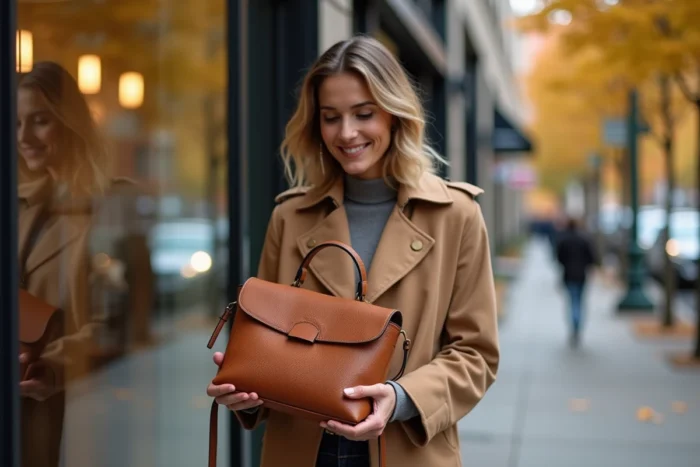
The bag remains the most scrutinized accessory. This season, compact and structured formats dominate. Micro-bags continue their rise, worn crossbody or in hand. Rigid materials (grained leather, tight weaves) are taking precedence over soft bags that marked previous seasons.
The compact structured bag replaces the soft tote as the central piece of the daily look. Colors range between earthy tones (camel, taupe, brick) and saturated touches (emerald green, cobalt blue) that elevate a neutral outfit.
Sunglasses and Shoes: Two Areas Where Style Meets Regulation
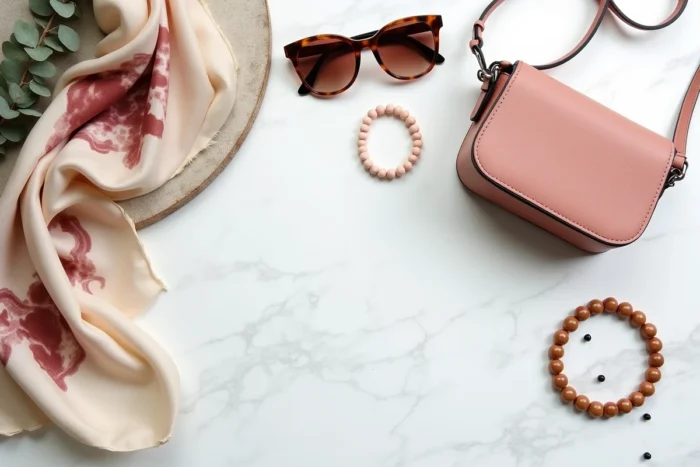
Sunglasses remain a recurring trendy accessory, but the market is evolving on a technical level. Frames made from bio-based or recycled materials are multiplying in collections. Oversized shapes and gradient tinted lenses visually dominate.
On the footwear side, the boundary between sneakers and dress shoes continues to blur. Thick soles persist, but with cleaner lines than two seasons ago. The hybrid shoe, suitable for both the office and the city, concentrates demand in the mid-range segment.
These two categories will be among the first affected by the extension of the digital product passport by 2030. Brands that invest now in the traceability of their materials are positioning themselves on a dual front: regulatory compliance and commercial argument.
Choosing a Fashion Accessory While Considering Weak Signals
Classic buying guides recommend prioritizing versatility and timelessness. This advice remains valid, but it overlooks a reality: a materially durable accessory is not necessarily stylistically durable. A vegetable-tanned leather bag designed to last ten years can seem dated after three if its shape follows a fleeting micro-trend.
- Favor simple geometric shapes (rectangular, oval) for bags and leather goods, which withstand seasons better than fanciful shapes.
- For jewelry, invest in one or two substantial steel pieces that serve as a signature, rather than accumulating fragile pieces.
- For eyewear, choose a frame whose shape suits the face’s morphology rather than following the oversized trend if it does not flatter.
The fashion accessories market is at a turning point between stylistic display and substantive demands. Upcoming European regulations, pressure on traceability, and evolving buyer expectations are redefining what a “trendy” accessory means. The most relevant piece this season is not necessarily the most visible on social media, but one whose origin, manufacturing, and expected lifespan are understood.