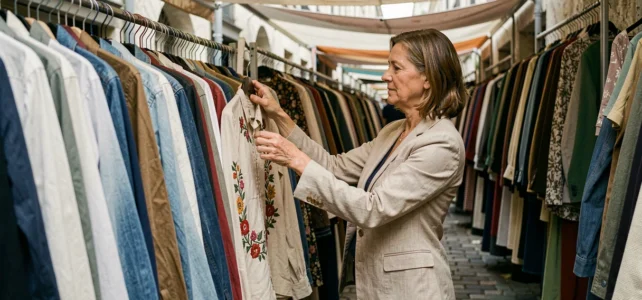
The Saint-Ouen flea market, accessible from the Porte de Clignancourt, is not just rows of antiques and trinkets. A growing part of its aisles is occupied by stands and shops dedicated to fashion, from carefully selected vintage to pieces by independent designers. Understanding how these spaces operate, what you can actually find there, and how to navigate them changes the way you approach a visit.
Authentication and traceability of vintage clothing at Clignancourt
Have you ever hesitated in front of a branded jacket sold at a market stall, unsure if it was authentic? This instinct is healthy. At Clignancourt, the question of authenticity arises with particular acuity because the market mixes professional sellers and occasional resellers.
The shops permanently located in the covered markets (like Paul Bert Serpette or the Vernaison market) are run by professionals. These merchants must keep a register of movable property, a requirement set forth by article 321-7 of the penal code. This register records the provenance of each item sold, including second-hand clothing and accessories. Failure to comply exposes them to criminal penalties.
In practical terms, this means that a professional seller should be able to tell you where the item you desire comes from. Asking to see the purchase invoice or a trace of provenance is not impolite. It’s even a reflex that discerning buyers are increasingly adopting, especially for branded pieces.
To explore the clothing shops at the Clignancourt market, spotting the signs that clearly display their sources of supply remains the first reliable filter even before looking at prices.
Malik Market and thrift shops: the true value of the textile offer
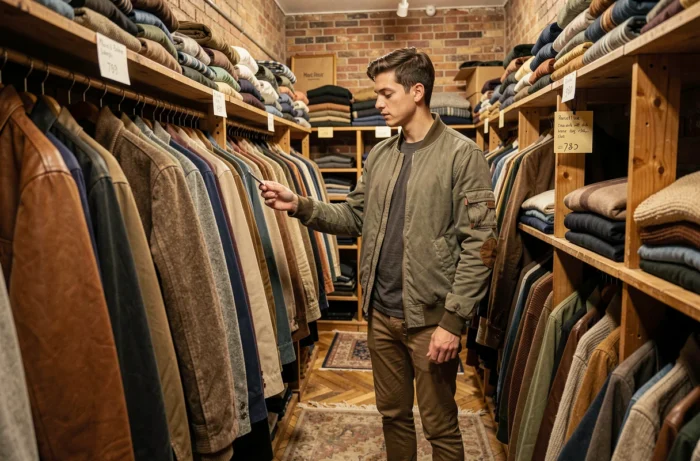
The Malik market is historically the heart of thrift in Saint-Ouen. It is where the largest volumes of clothing are concentrated, from streetwear to leather jackets, including sports jerseys and jeans.
The Malik market operates on a model of volume and rapid turnover. The stands frequently renew their stocks. Prices are low, but the selection requires time and a trained eye. The sorting is less meticulous than in the curated shops of other covered markets.
What distinguishes Malik from curated shops
The main difference lies in the notion of curation. In a curated shop (found at the Vernaison market or in the adjacent shopping streets), the seller has already done the sorting. They offer pieces chosen for their condition, rarity, or stylistic relevance. The price reflects this selection work.
At Malik, you do the sorting yourself. This is suitable if you are looking for basics at low prices or if you enjoy digging through items. Less so if you want a specific piece or an identified style.
- Malik: large volume, tight prices, personal sorting necessary, frequent stock renewal
- Curated shops (Vernaison, Paul Bert Serpette, shopping streets): limited selection, verified pieces, higher prices but time-saving
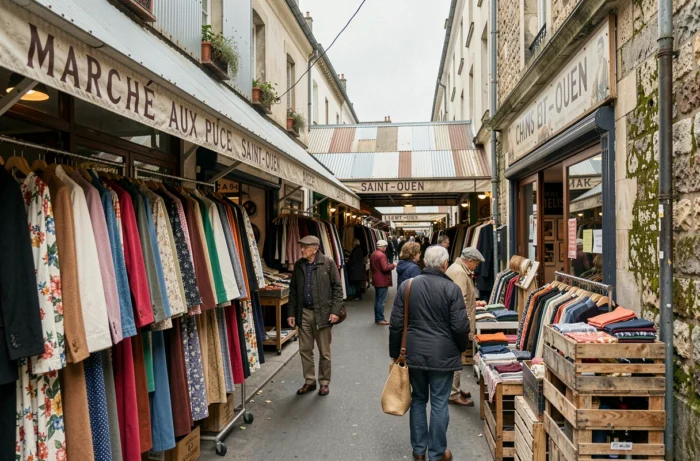
- Street stands between the metro and the market entrances: often new products (frequent counterfeits of major brands), to be clearly distinguished from the flea market itself
The street stands are not part of the official flea market. This confusion is the first mistake visitors make. The covered markets begin after the Rue des Rosiers.
Professional vintage fashion and designers at the Saint-Ouen flea market
The fashion offer at Clignancourt has evolved in recent years. Shops are now positioning themselves in a niche that could be called professional vintage: selected pieces, sometimes restored, presented like in a classic store.
Curated vintage attracts a clientele that far exceeds the Sunday bargain hunter. You will encounter stylists scouting, foreign buyers, and collectors of specific textile pieces (Japanese denim, militaria, 1990s sportswear). This upgrade in quality is reflected in higher prices, but also in a guarantee on the condition and authenticity of the items.
Identifying specialized shops
Some clues can help distinguish a specialized shop from a general stand:
- The presence of labels detailing the era, brand, and condition of each piece
- A neat arrangement, with spaced racks rather than bins of bulk items
- The seller’s ability to tell the story of the piece (provenance, manufacturing context)
- Acceptance of card payments, a sign of a declared and structured business
These shops are concentrated in the Paul Bert Serpette and Vernaison markets, as well as in the permanent shopping streets within the flea market perimeter.
Access and practical constraints for a fashion visit to Clignancourt
The Porte de Clignancourt metro station (line 4) is the main access point. However, some stations on line 13 in northern Paris will need to close in autumn 2026, which may complicate access for visitors coming from the north or from Saint-Denis. Checking the traffic status before leaving helps avoid wasting time.
The flea market primarily operates on Saturdays, Sundays, and Mondays. Saturday morning offers the best compromise between reasonable crowds and complete stocks. Sunday afternoon is the busiest time for visitors.
In terms of regulations, the law of May 26, 2026, has modified the prior declaration rules for outdoor sales. The administrative obligations mainly concern occasional sellers, but they strengthen the overall legal framework of the market. For a buyer, this means that regular stands are better regulated than a few years ago.
A fashion visit to Clignancourt should be prepared like a targeted shopping session, not like a tourist stroll. Knowing which covered market corresponds to which type of clothing, verifying the provenance of pieces, and arriving early on Saturday morning are three decisions that make the difference between leaving empty-handed and finding a piece worth the trip.